Introducing Evermore Corps, a national fellowship for bereavement leaders
By Joyal Mulheron
Twenty-five years ago this week, it was a beautiful September day in Washington, DC. I took the subway through the Pentagon and arrived at my then-office on Pennsylvania Avenue, directly between the Capitol Building and The White House. What followed next was no ordinary day. Chaos ensued as police, the military, armed patrols, and fighter jets overtook Washington. I don’t remember how I got home that day, living 25 miles away from the city center, but I am left with how our nation responded. Not only in recognition of the nearly 3,000 people who died that day, but also in the commitment to “Never forget” and honor the many thousands more who loved the dead, as well as those who served them.
What Came Next Is What I Keep Coming Back To
September 11th marks my most vivid memory of what it meant to stand as a nation. We decided that the families and responders would not be left on their own.
We opened family assistance centers. We created a compensation fund. We funded health monitoring programs that continue today. We did the slow, painstaking work of identifying the dead so families would have answers. None of it was perfect, and much of it was debated. But it was built, and it was built quickly, because we decided, as a country, that it mattered.
That is the point.
We know how to respond to tragedy, including death, in America. Indeed, we have, and arguably done it well.
We have simply never done it for everyone.
Most deaths do not make the news. Many bereaved people share that the world simply goes on, as if nothing has happened. There is no pause, no recognition, no moment of silence. Sometimes, when we say nothing at all, it speaks volumes.
Then the casseroles stop, the phone rings less often, and families are left to manage what comes next inside schools, workplaces, hospitals, financial institutions—and many times, within their own families and social circles, compounding the pain and isolation. As our social solidarity has waned, so have our responses when they arguably matter most.
To boot, we rarely hear about the extraordinary acts of care that take place every day, in every corner of America. The doctor who answers our most vulnerable questions candidly. The friend who leaves groceries at the front door. The off-duty firefighter who comes to the hospital to see how we are doing. The teachers who take a grieving child to the park.
That is solidarity.
It is also improvised, uneven, and too often left to chance. This is the change that a new generation of leaders will make, on behalf of us all.
Building the Next Generation of Leaders
Today, we are opening applications for Evermore Corps, a national fellowship for civic-minded leaders who believe we can—and must—change the way this country responds to grief and bereavement.
We are looking for people who want to build better policies, stronger research, more responsive institutions, healthier communities, and better preparation for the professionals who meet families during some of the hardest moments of their lives.
We do not know exactly what the future of bereavement care will look like. No one person or organization can see the whole of it (especially those in D.C., myself included). But we can invest in the people who will help build it, and we can make sure they do not have to do that work alone.
That last part – not having to work alone – I know what it’s like to have other people believe in you before you believe in yourself. I know what it’s like to look at what needs to be done and feel overwhelmed; the mountain toward change is so tall and steep that it feels insurmountable.
This kind of pioneering work can be lonely, slow, and frustrating, especially when you are trying to change systems built long before anyone asked whether they worked well for bereaved people. It is often invisible, taking years for results to surface.
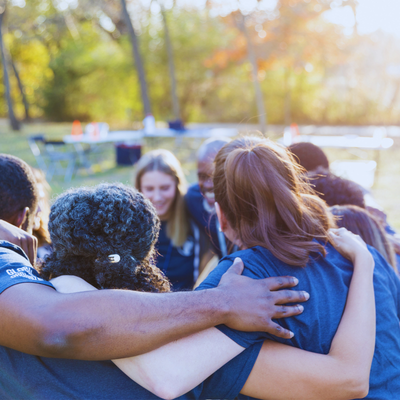
What helps keep people motivated and committed to an uncertain future is our community, a network. People who understand the problem you are trying to solve. People who can open a door, share what they have learned, make an introduction, or simply remind you that the work is worth doing.
That is what we want Evermore Corps to provide.
What We Decide to Do Next Makes All the Difference
Solidarity does not require us to have all the answers. It begins when we decide that someone else’s worst day is our business, too.
Twenty-five years ago, this country made that decision. Now, the challenge is to make it again—not for one day, and not for one tragedy, but for families in every zip code who lose someone on an ordinary Tuesday.
As John Lewis wrote, “Study the path of others to make your way easier and more abundant.”
That is what we intend to do: learn from those who came before us, make the path a little easier for those who come next, and build a community of leaders willing to imagine what a better response to bereavement could look like.
If you have been sitting on the bench, watching and wondering whether it is your turn—it is.
And if you know a civic-minded leader who belongs in this work, please send this to them.
We need them, too.
Apply to Evermore Corps →
Applications for the first cohort are now open and due Friday, October 30, 2026, at 11:59 pm ET.